The role that differing environments play on the major processes that eDNA undergoes between organism and collection, with recommendations for eDNA practitioners.

The role that differing environments play on the major processes that eDNA undergoes between organism and collection, with recommendations for eDNA practitioners.

BMSC Alumna, Brett Howard (SFU) and authors, report that the invasive green crab, Carcinus maenas, significantly reduces the density of ecologically important marine plant ecosystems.

Microplastic particles can easily sneak into our bodies undetected through food or when we breathe air containing microplastics, says BMSC Alunmus, Kieran Cox, a UVic marine biology PhD candidate in Francis Juanes’ lab.

BMSC Scientific Diving class goes under to explore the effects of handling and captivity on red sea urchins.

On growing a beautiful shell: How do snails coordinate the placement of shell sculpture?

Although the frilled dogwinkle (Nucella lamellosa) is a well-studied intertidal snail, questions have remained regarding the purpose of some variations in shell form found commonly in individuals of this species. The function of axial lamellae, an external shell structure giving some individuals of this species a frilled appearance, has remained a mystery. As a part…
Appetite for destruction: Invasive European green crabs in Barkley Sound eat faster and grow bigger
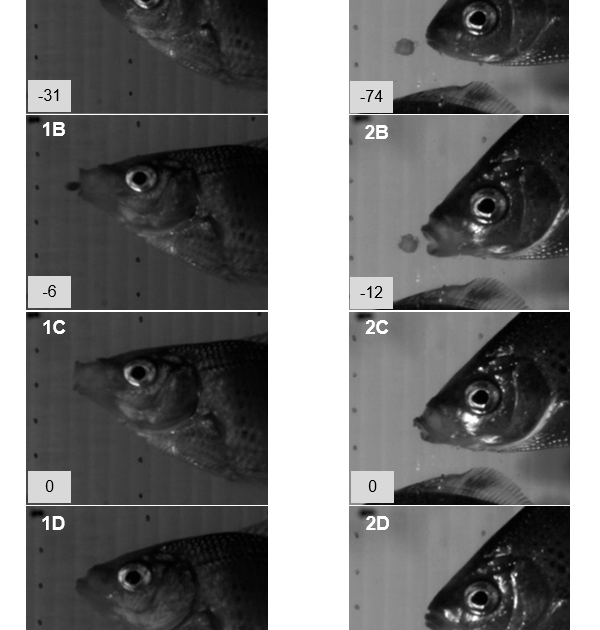
Recreational fishing is popular throughout the world and has significant socioeconomic impacts. Catch-and-release fishing is beneficial for a number of reasons, but the immediate impact of hook removal is poorly understood. Melissa Thompson, a University of Alberta undergraduate student, during our 2017 Biology of Marine Fishes course (co-taught by Tim Higham and Sean Rogers), caught…

Typically found on the wave-exposed sandy beaches of California and Oregon, the Pacific sand crab, Emerita analoga, was first noticed by our Marine Invertebrate Zoology students on Keeha Beach in 2016, leading to a publication by instructors, Dr. Mar Wonham (Quest U) and Dr. Mike Hart (SFU).

Our 2012 Science Diving class was part of the field crew to assist with Dr. Levitan’s research.