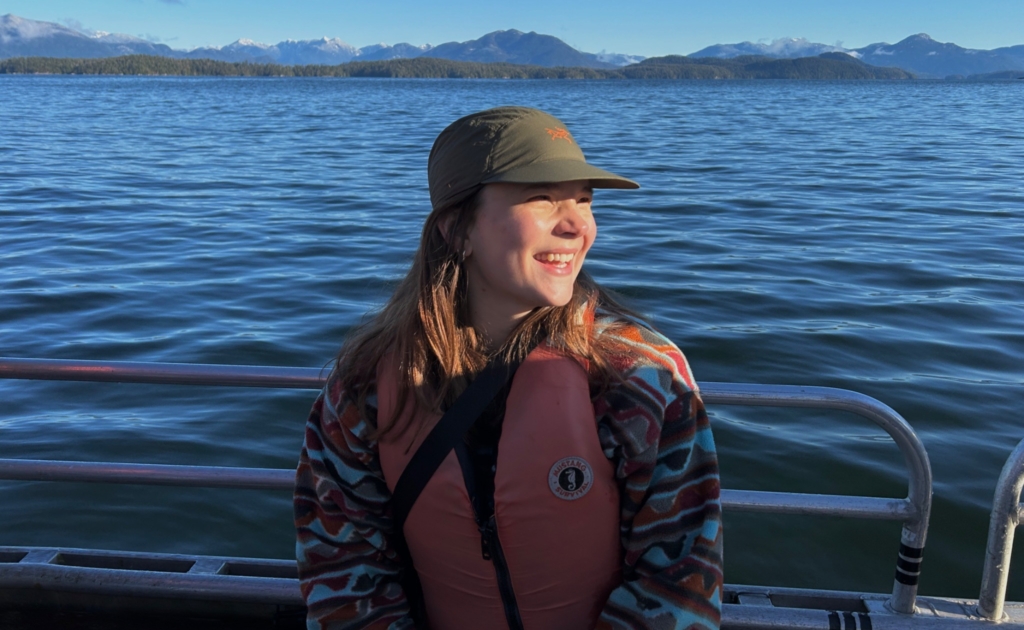
Blog and photos by Anna Kottek, 4th year student at SFU
There are many reasons why students choose one class over another in their final years of undergrad, and I had signed up for the Invertebrate Biology course at Simon Fraser University for one main reason: it included a weekend field trip to the Bamfield Marine Science Centre. I had heard so much about this research centre nestled into a little inlet on Vancouver Island’s West coast. Spending a weekend there seemed like the perfect way to figure out if I wanted to dedicate a summer semester to taking one of their many marine biology courses. Turns out, I had no idea how much I needed this 3-day experience. Seeing what I study being applied in real life and exploring one of my favourite ecosystems, along with fellow biology nerds, gave me so much life and encouragement as a somewhat burnt out fourth-year student.
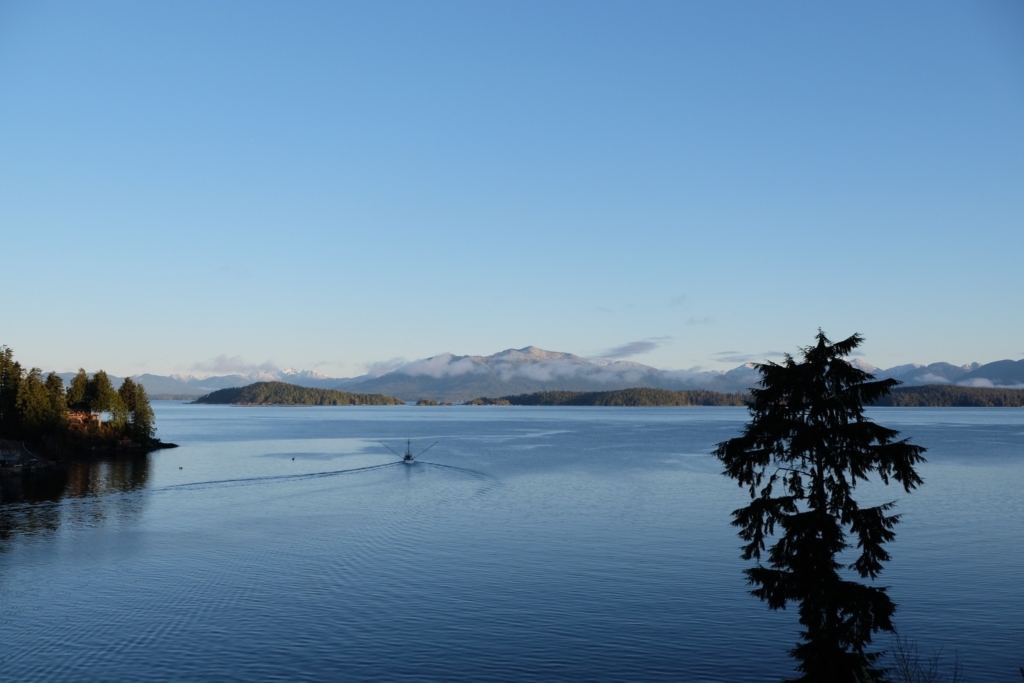
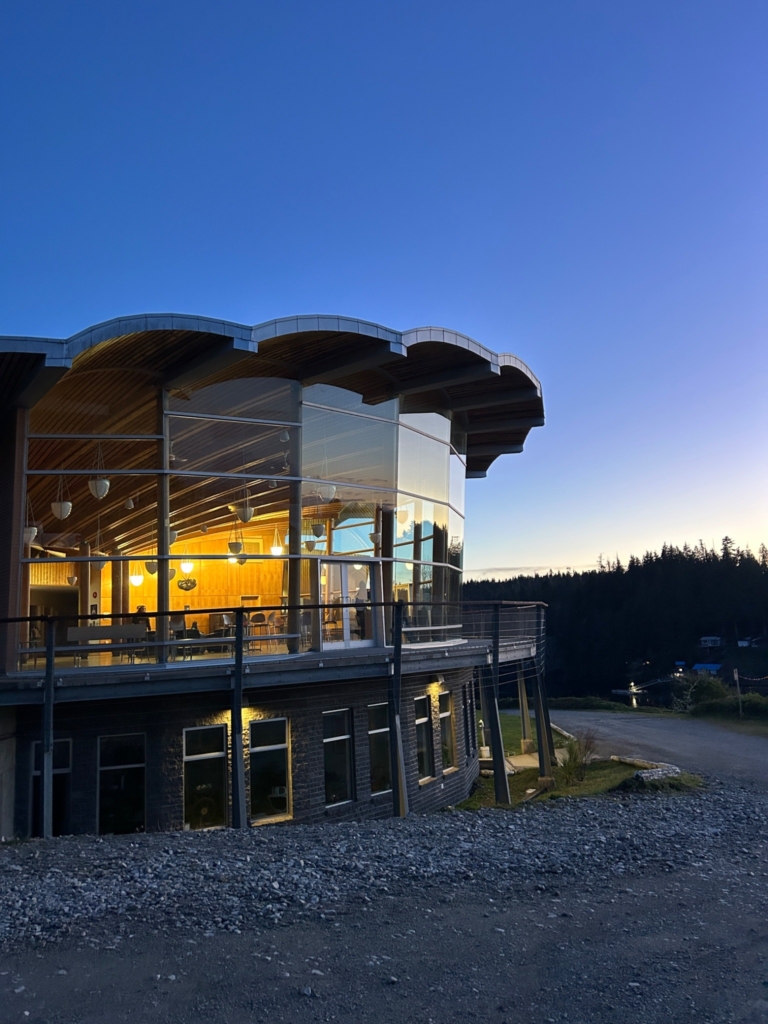
One sunny weekend in March, the time had finally come to go on our field trip, and to say I was excited would be an understatement. A ferry and a bus ride later, my classmates and I were dropped off in front of a giant scallop-shaped building, the afternoon sun glinting in its big ocean-facing windows. After a quick tour of the property, led by our very friendly instructor, Anna, we got to settle in, unpack, and explore the property for a couple of hours. I grabbed my camera and went for a little stroll toward the water. After a long travel day, it felt like I landed in a quiet little Oasis. Bamfield itself is a small and secluded fishing village with lots of little picturesque houses and boats around. The town and the surrounding area are situated on the traditional territory of the Huu-ay-aht First Nations, a Nuu-chah-nulth Nation and member of the Maa-nulth Treaty Society.
Immediately, I was drawn towards the library building with its patio offering a stunning view of Barkley Sound, the Broken Group Islands, and the mountains in the background. All the most important buildings at BMSC offer a version of this view as they face the water, even the dining hall. The sun started setting, and we got to watch the sky turn pink as we were having a very tasty and filling dinner. My eyes lit up when I saw the variety of snacks and cereals that we would be able to access around the clock. This could only mean one thing – I was definitely gonna have a late-night bowl of Froot Loops.
Some people stayed up and played games or tried themselves on the old piano in the Rix building (the one shaped like a scallop), but my roommates and I were tired from the journey and went to our dorm rooms after it got dark. Based on my extensive experiences with dorm rooms in hostels and on other field trips, I expected the bare minimum for our accommodations. To my surprise, the dorms, shared washrooms, and common areas were super spacious and clean. We cracked the window open to get some of that fresh coastal air and fell into a deep sleep.
The alarm rang early on Saturday morning to get us out of bed and down to the dining hall, where a warm breakfast, fresh fruit, and hot coffee were waiting for us. It was a sunny morning, but the air was crisp and the ground icy. A fresh layer of snow had covered the mountains across the sound. Wrapped in many layers of clothing, we walked down to the dock after breakfast to put our life jackets on and board one of the boats. Split into three groups, we explored and learned about three different kinds of sampling for marine biology research. That morning, my group’s first activity was oceanography. Before we even got on the boat, we saw some bald eagles, river otters and cormorants. Anna, our instructor and skipper, took us to Grappler Inlet to collect data about the oceans’ salinity, temperature and depth. Interestingly, this inlet can have a high percentage of freshwater depending on the season. That morning, the water’s surface was calm and covered in a thin layer of slushy ice. Despite the freezing temperatures, we had a lot of fun learning about the ocean while being surrounded by it in the sunshine. We also collected samples of phytoplankton and zooplankton to analyze in the lab the following day.
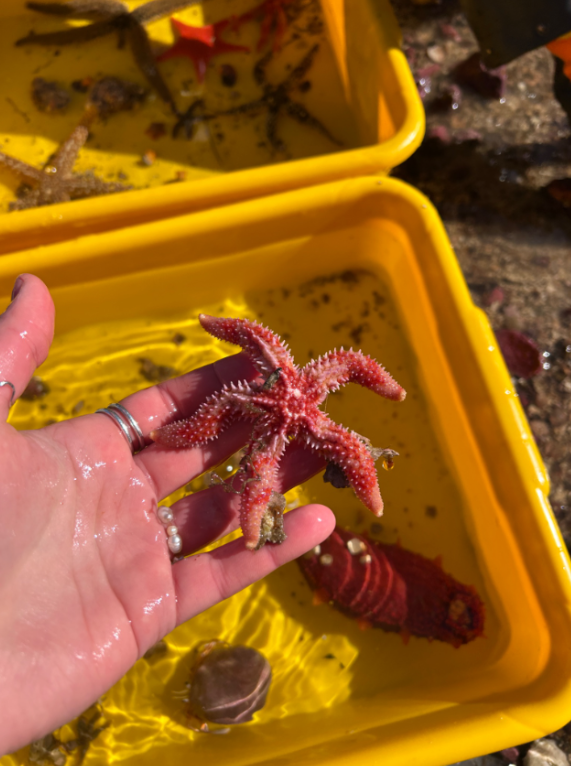
Our second and third activities were focused on seeing live animals in their habitats. We looked at all kinds of invertebrate creatures on the rope “farms” around the boat dock. Tube worms, mussels, tunicates, anemones and more. Then we went aboard the Alta, the biggest boat at BMSC. Out on the open water, past Wizard Islet and the napping harbour seals, we did some benthic dredging. The small net brought a large variety of marine critters to the surface for us to look at. This is when I learned that sea stars can regrow their arms, as we saw several of them with one small regrowing limb. All the BMSC instructors are very approachable and were happy to answer any questions we had. Our brains filled to the brim with new knowledge and impressions, we made our way back to land and had some lunch
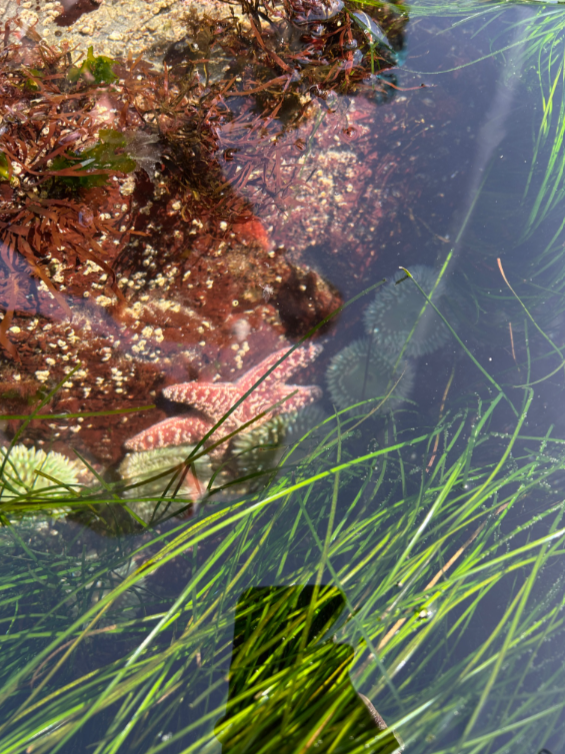
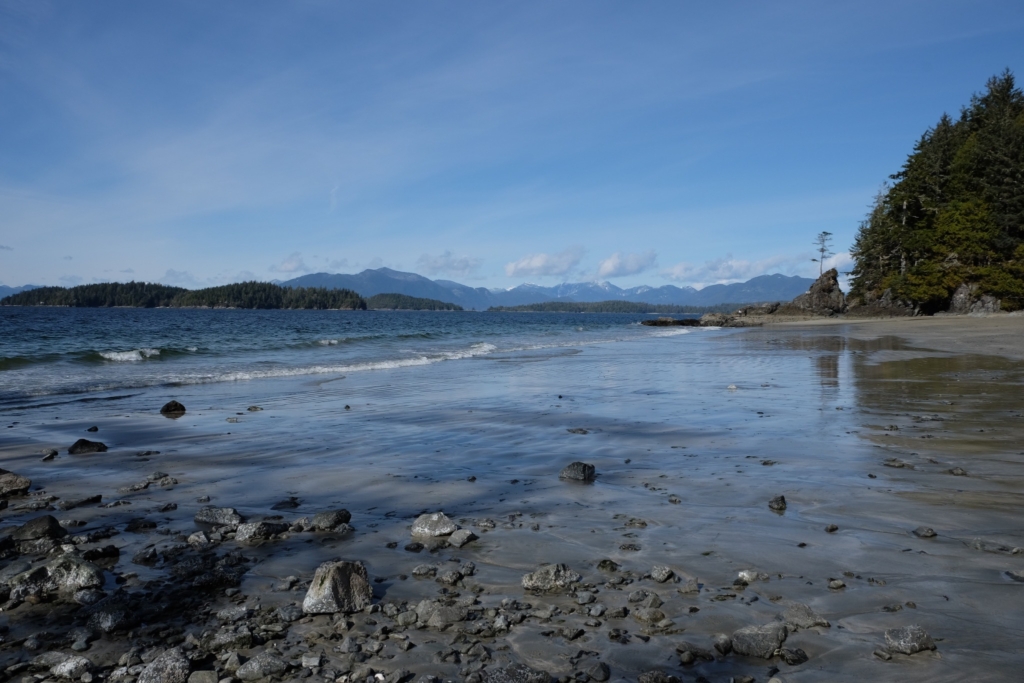
The second half of the day started with us crossing the water to get to West Bamfield. We were greeted by a friendly neighbourhood cat and a very cuddly Labrador. I went into the little general store for a quick snoop around and found a hand-knit toque with little waves and crab patterns on it, and I will tell you, I rarely have ever loved an object as much as I love this hat. Everyone in town seemed super friendly and welcoming. We walked to the other side of the peninsula to spend the afternoon at Brady’s Beach. All the cool rock formations and trees right by the ocean reminded me of the coastline in Olympic National Park. We went during low tide, which meant it was tide pool o’clock! Besides many crabs, sea stars, anemones, and lots of different kinds of seaweeds, we also found thousands of Valella Valella or By-the-Wind Sailors, washed up on the beach. These weird-looking creatures are hydrozoan colonies that quite literally use a sail to float in the ocean.
After a few hours of exploring and enjoying the sun at the beach, we went back to BMSC and got to plunder the gift shop before dinner.
All our meals were truly satisfying, and any dietary restrictions were accommodated. The common buildings, such as the library and dining hall, are accessible to students around the clock, so we were able to gather and have fun or retreat and work on assignments individually.
Once the sun had fully set, we gathered down by the dock to see something very special. Bioluminescence! It took our eyes a while to get used to the dark. But then we swished the water around with our hands, and there it was – the faint glow of tiny dinoflagellates in the water. Above us, something else was also staging a spectacle by showing off its glow. With very little light pollution around, the night sky in Bamfield is stunning on a clear night. Overall, a magical experience.
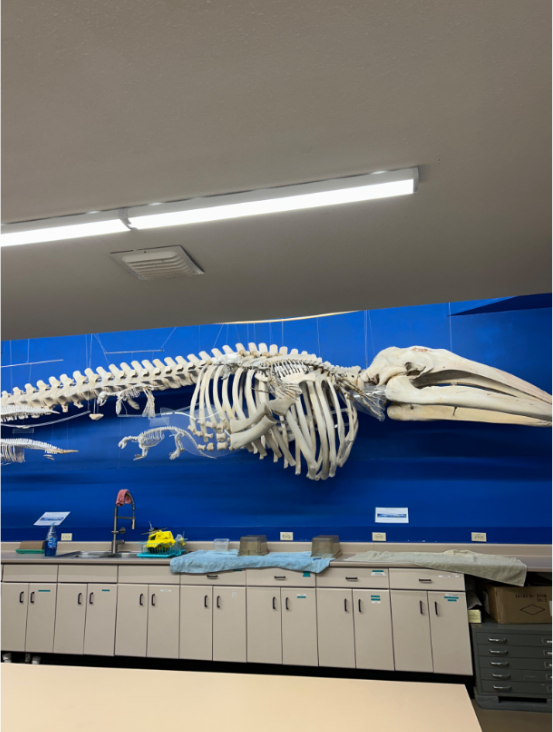
On our last day, we learned about plankton and all the different invertebrate animals in the lab. Our instructor, Grace, was amazing at explaining different concepts to us and guiding us through the activities. We got to look at our own plankton samples under the microscope and view live animals in the Whale Lab. Why is it called the Whale Lab you ask? Because there is a REAL gray whale skeleton hanging from the ceiling. My jaw was on the floor. Besides the whale skeleton, there are also seal, otter and other marine mammal skeletons on display. The touch tank in this lab is also something worth checking out. Students are allowed to safely interact hands-on with animals such as anemones and urchins in this round seawater-filled tub.
Our time at BMSC flew by way too fast. With lunch to go in our bags, we loaded the same bus that dropped us off on the first day. As I mentioned in the beginning, this experience was way more than just a field trip to me. Being submerged in the world of marine biology in a place as special, unique and biodiverse as Bamfield reminded me of why I chose to study biology in the first place. Nothing is more impactful than hands-on learning in the real world, in my opinion. If you have the chance to go and visit, even just for a weekend – do it! I’m not sure when, but I will be back, that is for sure.