Dr. Sisk and Dr. Palen will speak about: “Oil sands, hydropower and wildfire: Leveraging science for policy innovation”.

Dr. Sisk and Dr. Palen will speak about: “Oil sands, hydropower and wildfire: Leveraging science for policy innovation”.

Dr. Don Levitan will speak about: “Love and jealousy in sea urchins: sexual selection and the evolution of gamete recognition proteins”.

NSERC PromoScience provides financial support for organizations working with young Canadians that use hand-on learning experiences to promote an understanding of science.
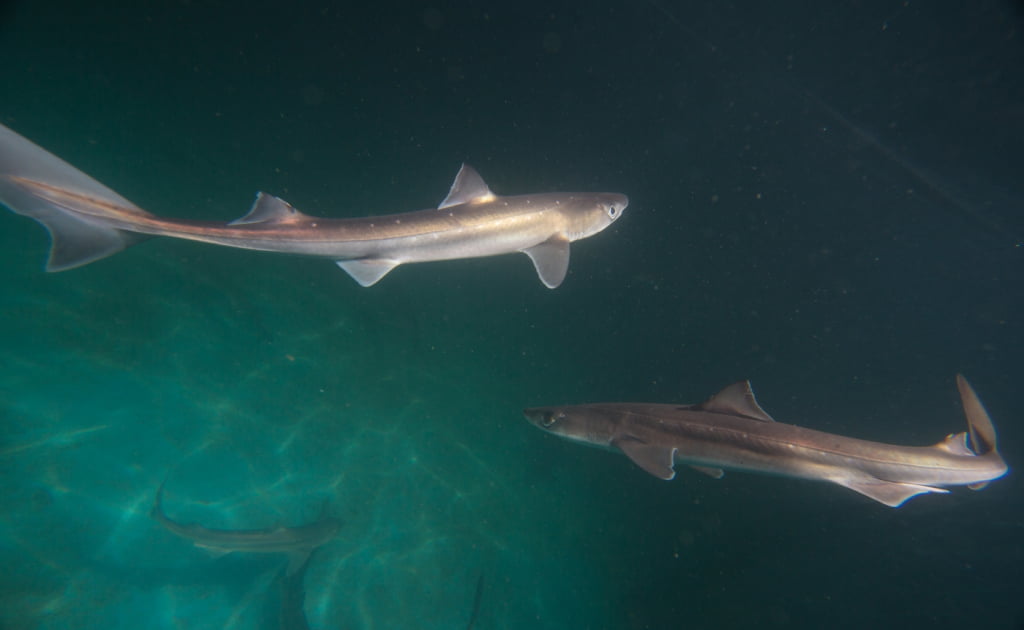
“Sharks modulate their escape behavior in response to predator size, speed and approach orientation”. Scott Seamone, Tristan Blaine, and Timothy E. Higham.

Dr. Caroline Fox, BMSC Fall Program instructor, has written a new book entitled: “At Sea with the Marine Birds of the Raincoast”, to be released early May.

Vice Presidents from our 5 member universities enjoyed learning all about BMSC during their visit here last weekend.

Discovering marine science on the wild wet coast; Ambrose University Zoology students share their field trip adventure!

Kelps from wave-swept shores have either a streamlined morphology to reduce drag, or increased attachment and breakage force, but not both, having implications for the evolution of morphological diversity in this group.
BMSC is gearing up for another season of Field Trips, with the first group arriving on the weekend.

This book by Duncan Irschick and BMSC instructor Tim HIgham examines how and why ‘animal athletes’ have evolved using examples from across the animal kingdom, integrating them into the broader context of ecology and evolution.