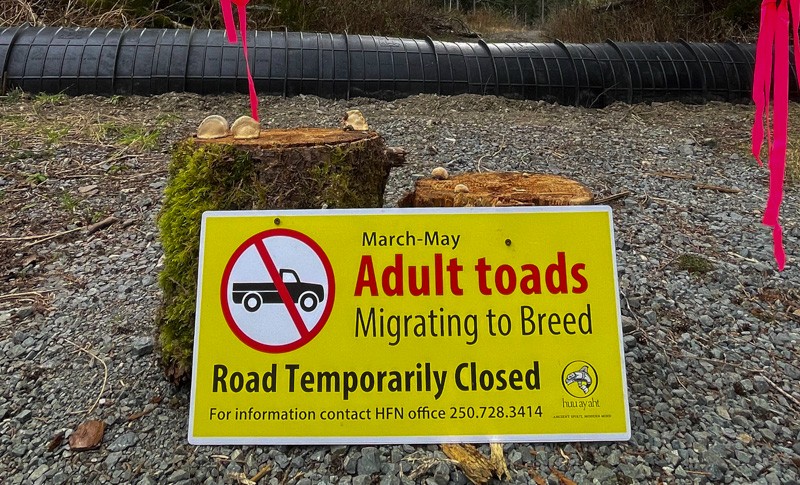
When you think about migrating animals, the first that come to mind are probably birds, maybe whales, maybe caribou… but how about toads?!
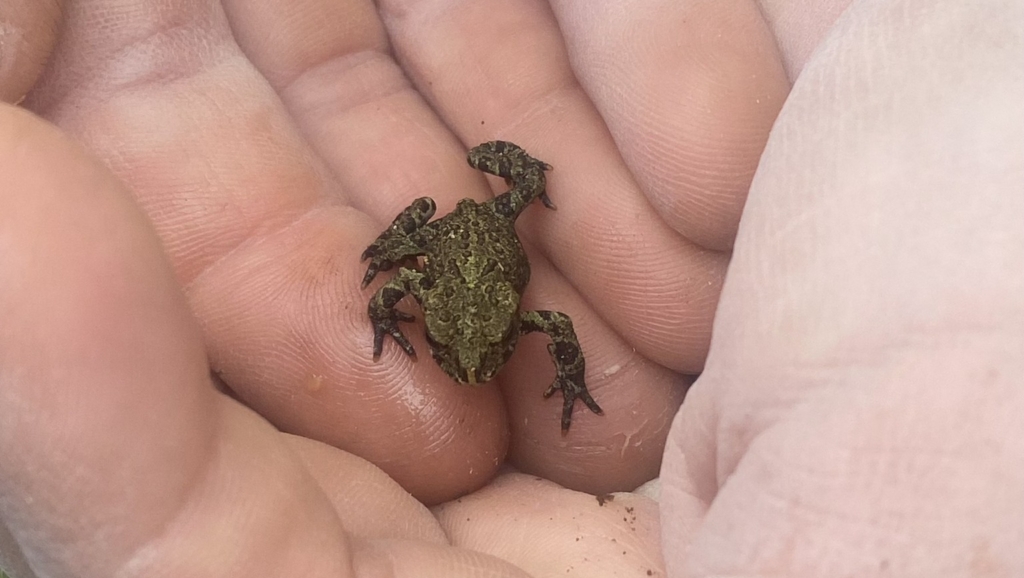
That’s right, toads are migrating animals, and they actually go some pretty impressive distances considering their small size – they have been tracked moving 7km away from their “home” lake! In the temperate rainforests of British Columbia, toads like the Western Toad lay their eggs in water bodies like lakes, and migrate out into the forests, to come back again in the spring and lay their eggs once again. They have been doing this for a very long time, but now, there are some major barriers to this migration – our roadways.
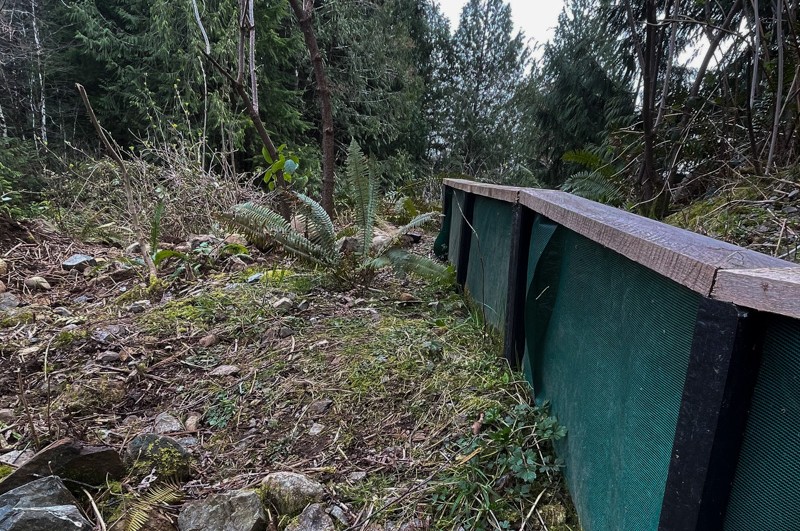
The solution? We can help these species at risk by getting them to go underneath the roads and avoid the dangerous journey across. Special culverts are built underneath the road allow safe passage for migrating amphibians, they are essentially little wildlife underpasses! Additionally, short fencing along the road helps to guide critters to these “toad tunnels” so that they are sure to use them instead of crossing on the road and risking a fatal run in with a vehicle.
In 2021, the project to build migratory toad tunnels and toad fencing around Fredrick Lake started. This lake, which is prime Western Toad habitat, is found in Alberni-Clayoquot and is a traditional site of the Huu-ay-aht First Nations. Over the years, multiple tunnels and stretches of toad fencing have been built along various lengths of the Bamfield Road, The Association of Wetland Stewards for Clayoquot and Barkley Sounds with their project “SPLAT” worked with the Huu-ay-aht First Nations and the BC government to make this happen. You can read more about the history in this blog by the Huu-ay-aht First Nations team! Now, hundreds of toads use these underpasses every year!
Alas, there is still one more major threat to toad migration despite the carefully built tunnels and fencing; this thorny problem is none other than invasive Himalayan blackberry. These prickly fast-growing plants take over the roadsides, blocking the movement of animals, suffocating out native plants, and sometimes even damaging the toad fencing itself. So, it has to be controlled, and ideally, removed from the area.
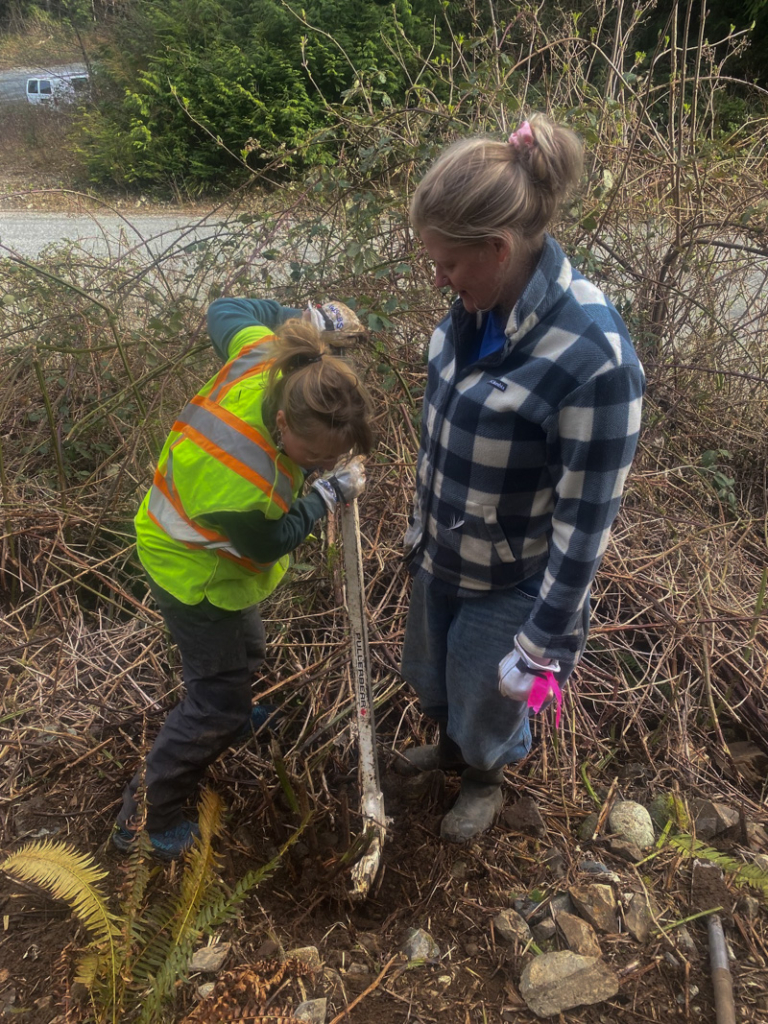
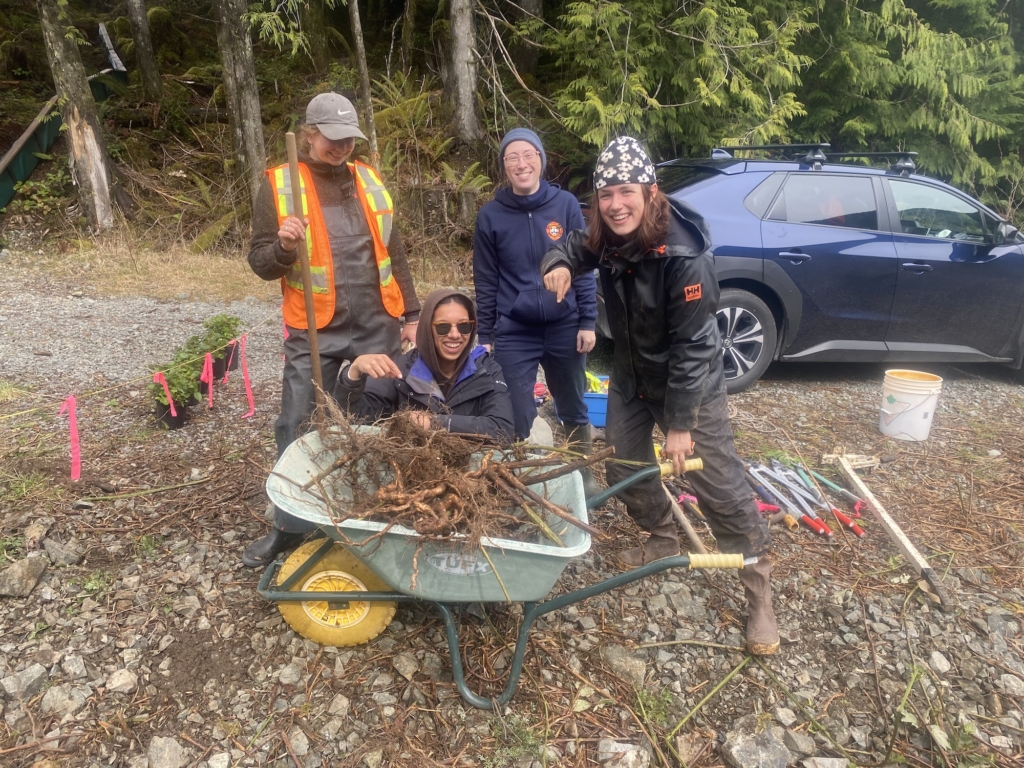
Unfortunately, removing blackberry is no easy job because it is fast growing and extremely persistent. To get rid of blackberry, the plants needs to be chopped down and the roots dug completely out. This process needs to happen several times a year as well until the area is recovered, since the seeds are easily dispersed by birds and other animals that like snacking on their berries. Once an area is cleared, the empty spaces need to be filled with native plants that will hopefully thrive and prevent the blackberry from taking over again. It is not for the feint of heart, but for the toads and the other amphibians it helps, it is well worth it.
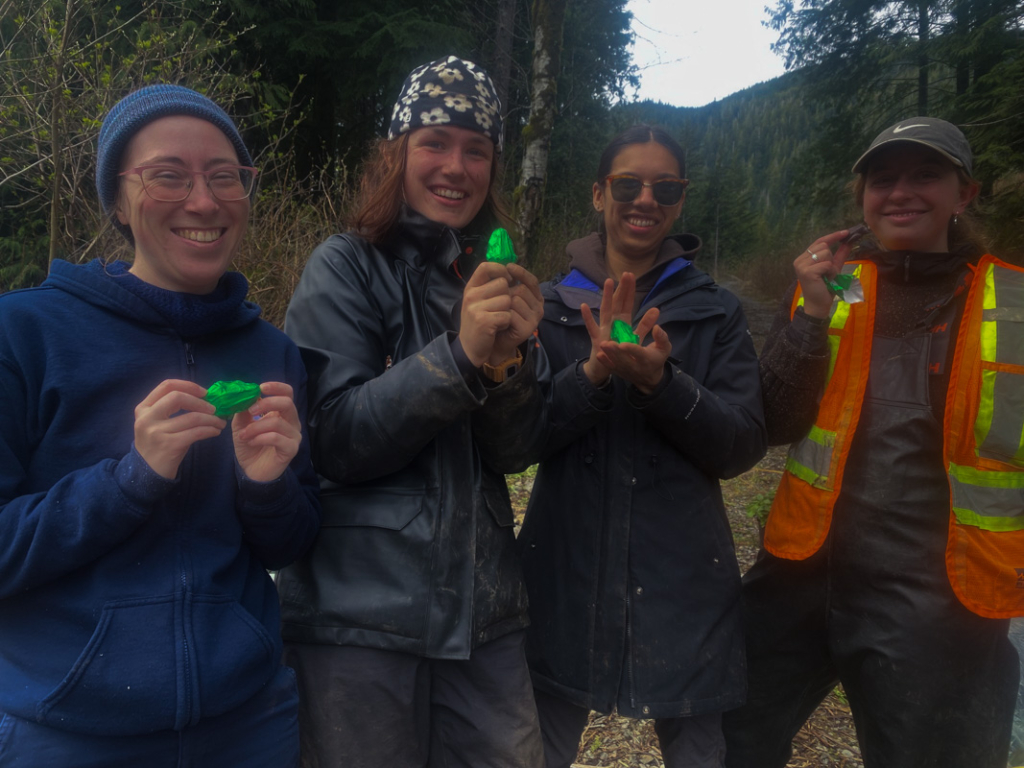
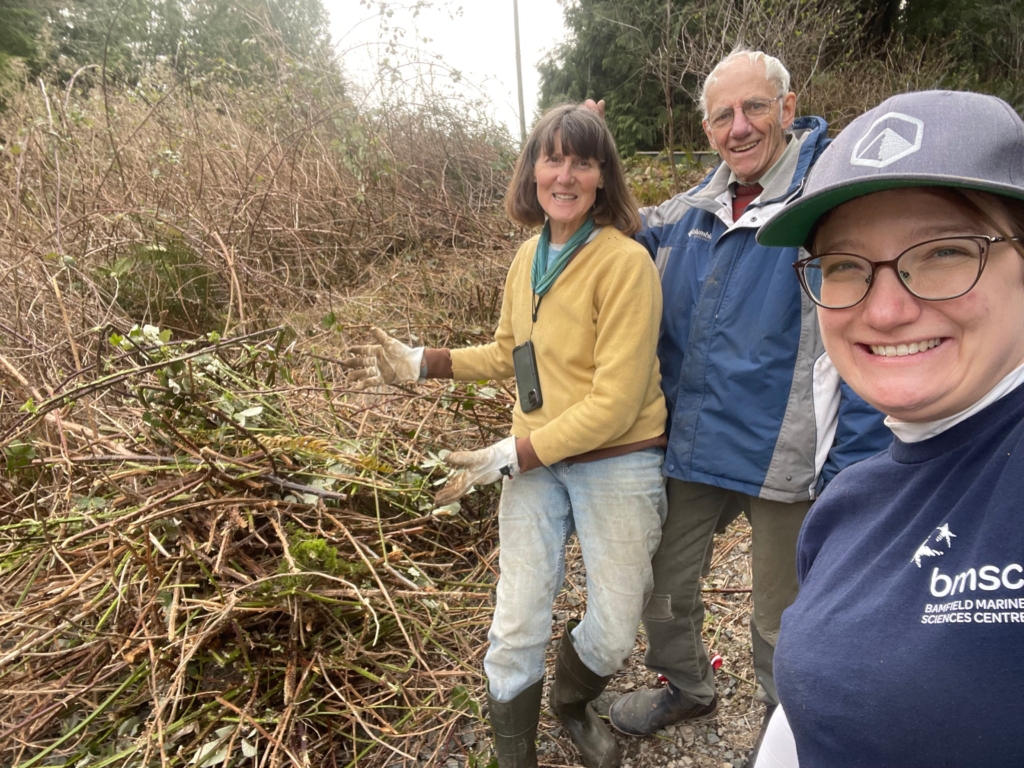
In late March of 2026, teams headed out over several dates to make more progress on the removal of blackberry, a project that has been going on for several years. The group included Dr. Barb Beasley of the Association of Wetland Stewards for Clayoquot and Barkley Sounds (the founder of the association and leader of this project) and her partner Gerry, along with the Huu-ay-aht First Nations, dedicated volunteers, and team members from The Bamfield Marine Sciences Centre (BMSC). They had a successful couple of days, and made the most of the hard work, Dr. Barb Beasley said “it felt so good to successfully free the ferns and Elderberry from the prickly brambles that were smothering them! We made good progress… Cheering each other on as we pulled out the biggest and gnarliest roots was good fun too!”
For the BMSC, it was really important to help with this project in a hands-on way and be involved in the stewardship, conservation, and restoration of the areas that make up our backyard. Amy Yuschyshyn, one of the BMSC’s Marine Science Educators who joined in the blackberry fight said that “I really enjoyed helping out! I felt as though I was making a direct impact on the ecosystems that I am fortunate enough to work and play in every day – and get to take care of a place that has taken such good care of me. Not only that, the work itself was super hands on, and helped provide me experience and perspective in work that is normally outside of my regular field. It is super fun to hang out and do cool, meaningful work with such great people!” Anna Parsons, another Marine Science Educator who heped out, also appreciated the experience, stating “It was a pleasure to help Barb and the team on the side of Bamfield Main pulling out gigantuous blackberry roots and helping create a safer native habitat for the toads!”
Though there was great progress in this latest group effort, the work is not done and the project will need continued maintenance to remain effective. You can follow the Association of Wetland Stewards for Clayoquot and Barkley Sound on Facebook for updates and you can donate to the project through this Canada Helps Portal.