In Short
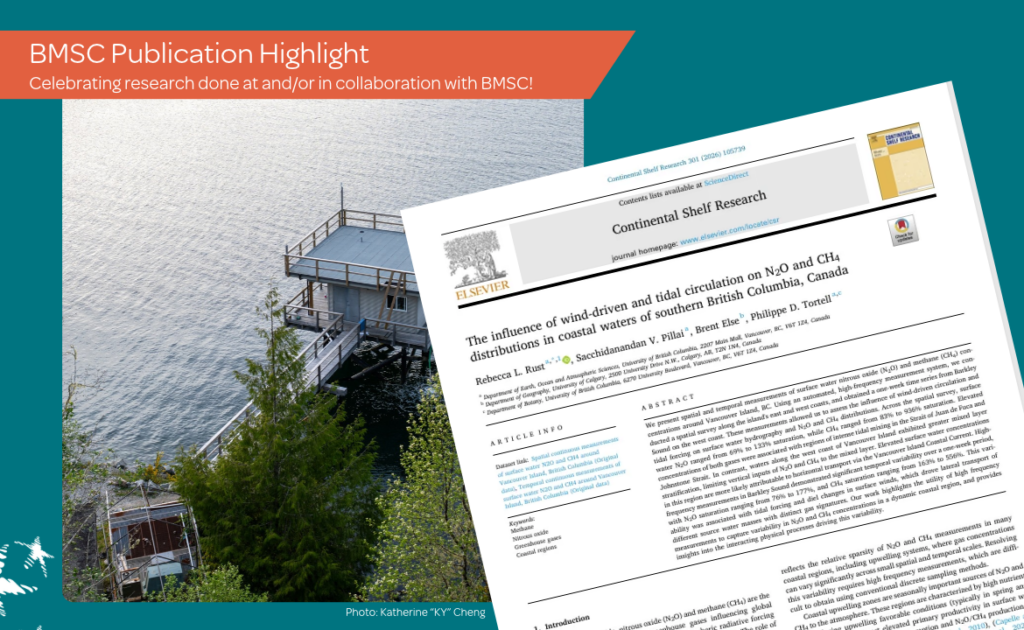
Rebecca Rust and team measured nitrous oxide (N2O) and methane (CH4) concentrations in marine surface waters around Vancouver Island to better understand the role of both the winds and tides in generating the observed variability in these gasses.
This work examined the large-scale spatial influences of wind driven upwelling and tidal currents on N2O and CH4 around the entire Island, but also zoomed in to Barkley Sound to examine how these influences could manifest temporally.
So how do differences in BOTH winds AND the tides change what these gasses are doing in different places?..
These time series measurements revealed that both wind driven surface water currents and tidal currents work together to create the observed variability in N2O and CH4 concentrations in this region.
Why is this cool?
“This work is neat because previous work has highlighted either wind OR the tidal cycle as the driver behind surface water greenhouse gas variability in coastal regions. Here we were able to show that it is both, which provides us with a deeper understanding of the processes that are interacting to create the observed concentrations.” – Rebecca Rust, UBC
“Coastal regions are very complex and dynamic, so continuing to work to understand the variability of greenhouse gases in these regions is super important when we think about building models or scaling up to look at regional and global emissions budgets of these gases!”
The Data
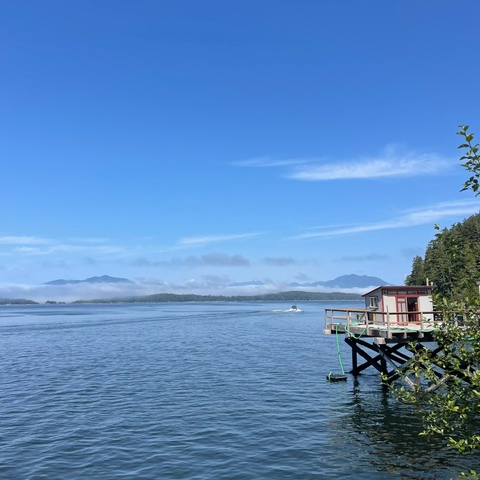
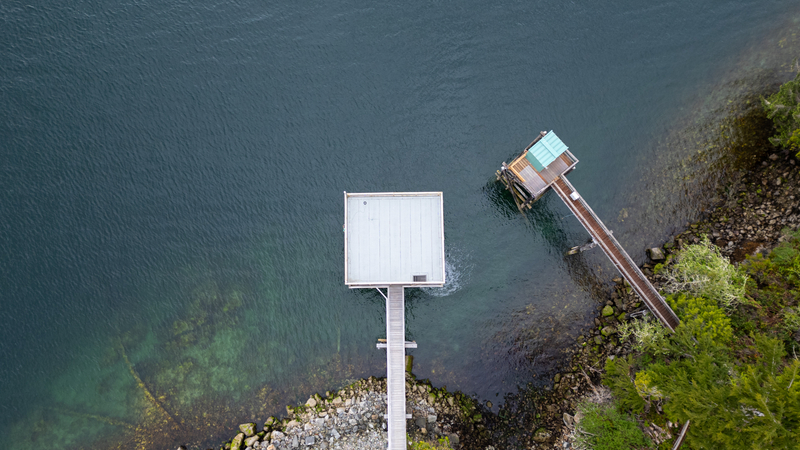
The time series measurements were collected at BMSC in the Pearl lab alongside other oceanographic and environmental variables (salinity, sea surface temperature, wind speed, wind direction, etc.).
Here is a photo from Rebecca of what the PEARL looked like when this work was done, before the renovations made possible through the CFI EMPOWER grant.