Water Systems, Laboratories, and Research Facilities
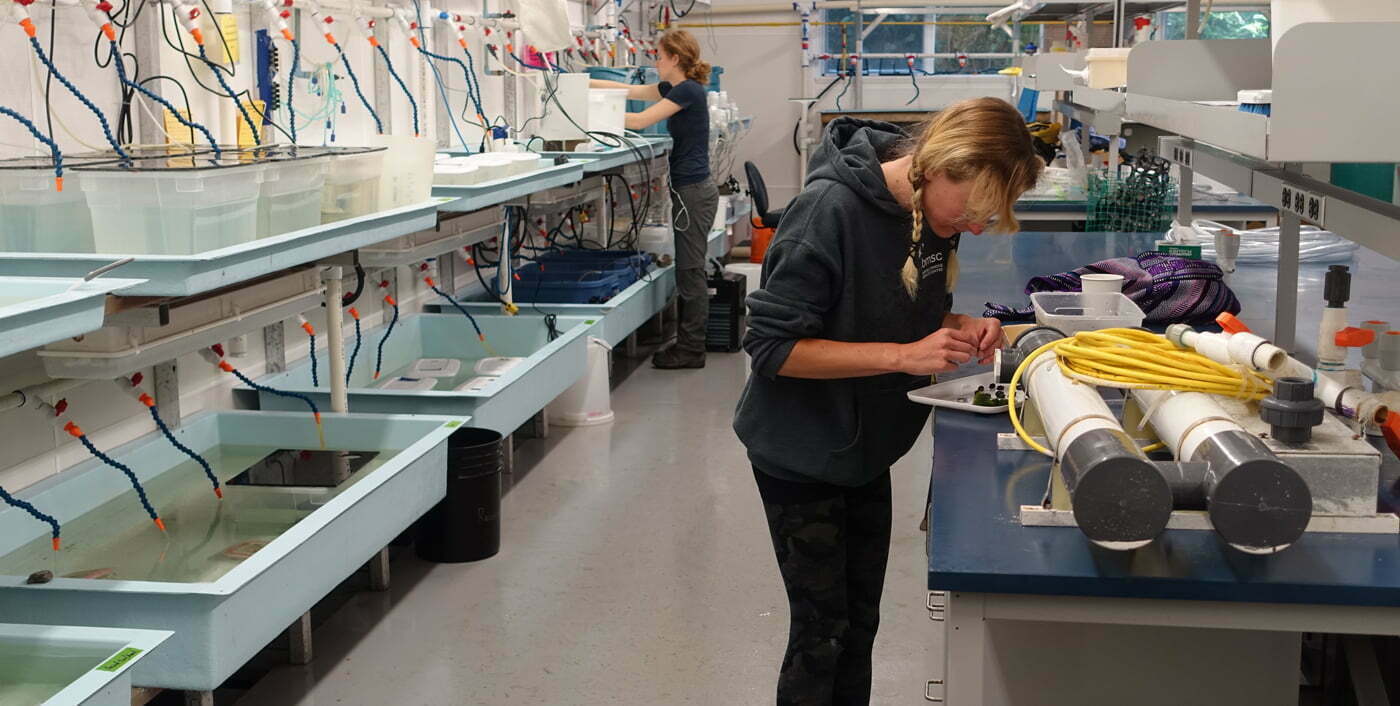

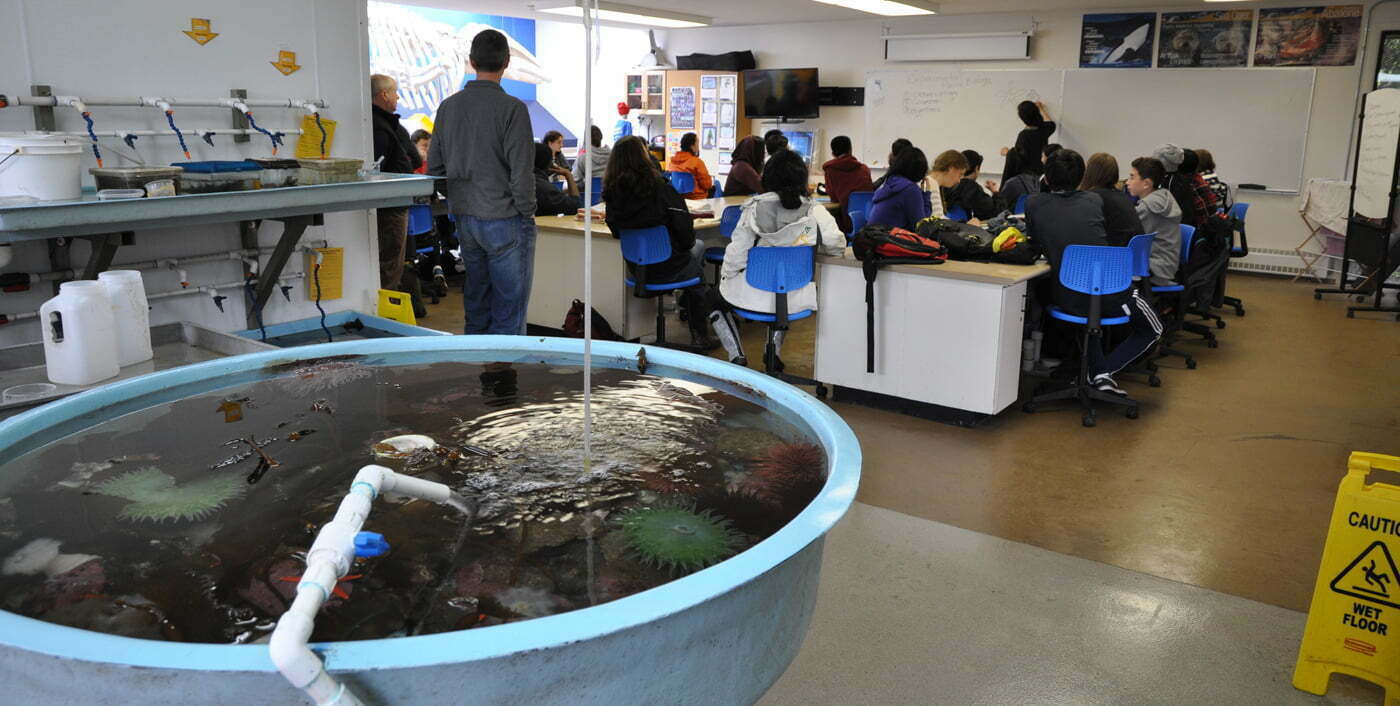


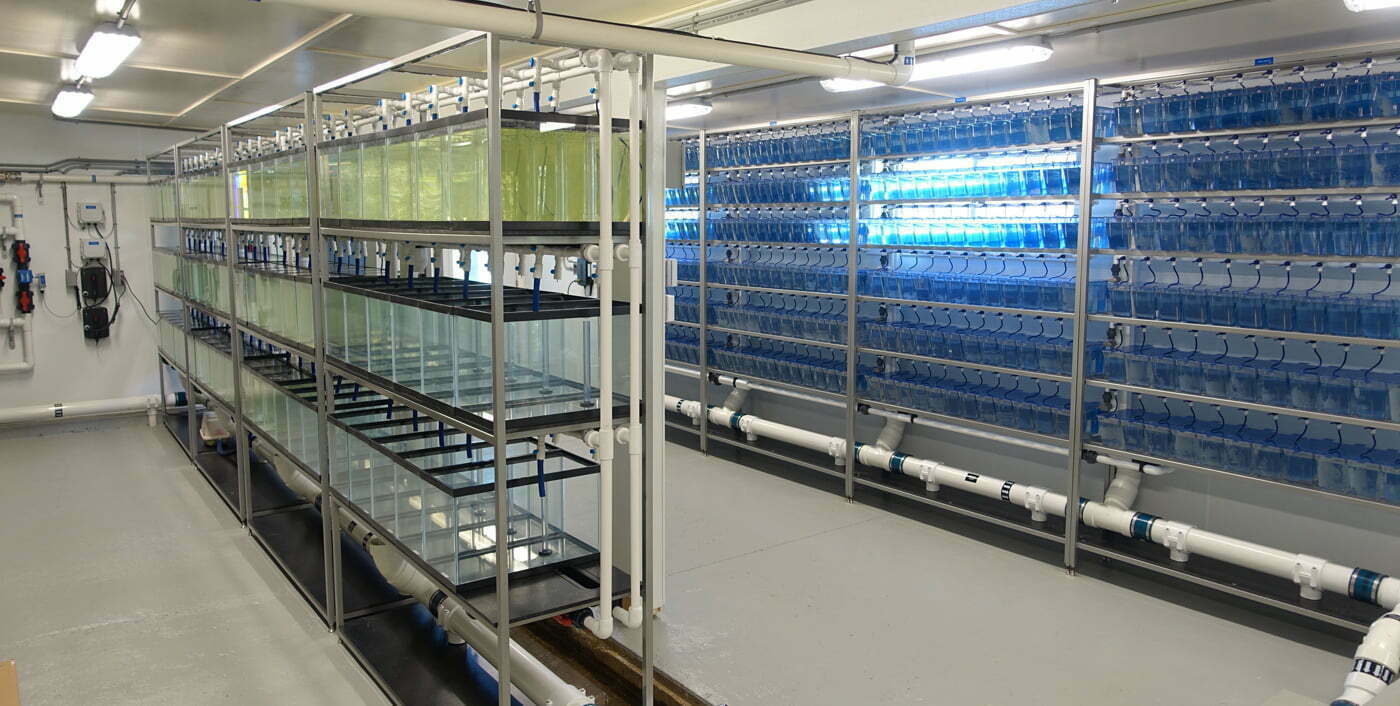

The BMSC has extensive modern laboratory spaces from sea tables to stickleback tanks with timed water delivery systems, outdoor salmon tanks, a large shark tank, our ocean sensor laboratory and more. We are able to host a wide range of research in ocean and coastal sciences.
About Our Water Systems:
BMSC’s seawater system supplies up to 3,000 litres of high-quality seawater per minute to all areas of the Centre. Seawater is pumped from 30 meters below sea level to 97,000 litre holding system. Aquaria throughout BMSC are then fed by gravity in a one-way flow-through system.
Our flow-through freshwater system consists of a 120,000 litre holding tank for de-chlorinated freshwater research applications – connected to several of our laboratories and tanks.
Our total aquaria space exceeds 800 m2, with a wide range of tank options, available both indoors and out.
Reverse osmosis Laboratory-grade water is also available
Laboratories and Research Facilities
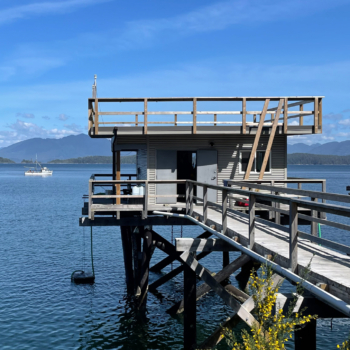
The PEARL – Pacific Ecosystem Autonomous Research Laboratory
A suite of sensors to collect continuous data for atmospheric conditions and ocean surface variability, enabling us to understand the ecosystem’s daily cycles and seasonal changes over extended periods.
The use of real-time, continuous monitoring with advanced sensors provides a cutting-edge approach to studying ocean surface conditions. The research allows for detailed observation of short-term and long-term changes in ocean biology and chemistry, including daily cycles, seasonal shifts, and large climate events, such as El Niño / La Niña cycles. The infrastructure allows global remote data access, enabling researchers worldwide to monitor environmental conditions in real time, without being on-site.
See more here: The PEARL | Bamfield Marine Sciences Centre
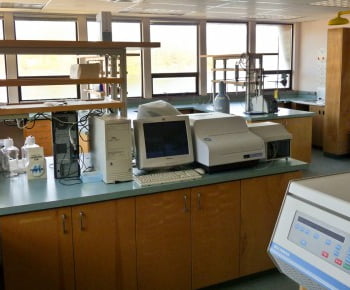
Eco-physiology Laboratory
The Eco-physiology Laboratory consists of five laboratories and adjoining aquaria with flow-through seawater and dry lab space. These labs support neurophysiology, animal physiology, and molecular biology research.
Three laboratories in the Eco-physiology building are designated for isotope use, certified by the Canadian Nuclear Safety Commission (CNSC) as 813-designated laboratories and come equipped with a LS6500 liquid scintillation counter (for alpha and beta emitters only). This facility also houses an Atomic Absorption Spectrometer (femtomolar accuracy for measurement of Cl, K, Na, etc), -80˚F freezer, autoclave and various other equipment
Stickleback Laboratories
BMSC has two laboratories specifically designed for breeding and rearing stickleback (Gasterosteus aculeatus complex), a powerful system for studying the molecular basis of evolutionary change in natural populations. Our wet labs consist of two rooms supplied with flow-through seawater and de-chlorinated fresh water, and various sized aquaria to house brood stock and conduct replicated experiments.
These labs were funded by research grants to Dr. Sean Rogers (UCalgary) and Dr. Dan Bolnick (U Texas at Austin).
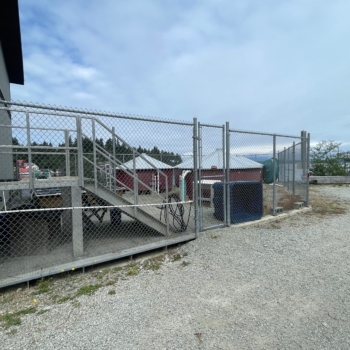
The Bear Cages
Our outdoor bear cages consist of secure, fenced aquatic holding areas designed to prevent wildlife access while providing a safe and flexible environment for research organisms. The facility includes a wide range of tank sizes and configurations, with access to seawater and dechlorinated freshwater to accommodate diverse experimental needs.
Several are equipped with header or mixing tanks, allowing researchers to modify water characteristics before distribution to experimental tanks. This enables precise control of parameters such as salinity, temperature, and other water quality conditions, supporting a broad range of aquatic research applications.
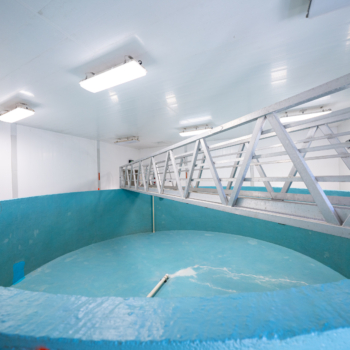
Cable Tank (Shark tank)
Our largest seawater aquarium is the “Cable tank”, an 9-meter diameter, 2.4 meter deep tank, with a volume of about 140,000 litres. The cable tank holds dogfish for our visiting researchers and has been used in the past to study herring acoustics.
Fluid Dynamics Laboratory
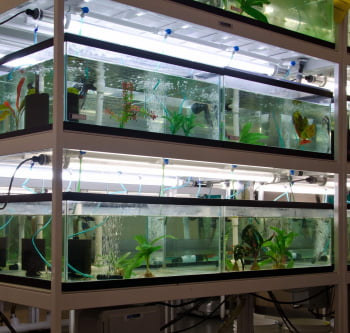
The Fluid Dynamics Laboratory is a CFI funded facility housing a stickleback breeding laboratory (University of Calgary), wet labs, preparation rooms, and soon to hold mesocosm spaces!
This facility has been used historically by university students to study hydrodynamics of seaweeds and fishes, and research conducted here includes the hydrodynamics of underwater turbine systems (University of Washington) and barnacle feeding (University of Alberta).
Environmental Control Chambers
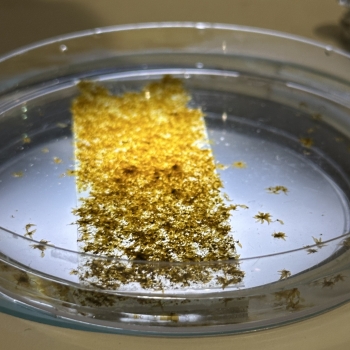
Our Environmental Control Chambers provide highly customizable aquatic research spaces designed for experiments requiring precise control of environmental conditions. The facility houses 12 sea tables arranged in four identical sets of three, allowing researchers to run replicated experiments or configure multiple independent treatment groups with consistent conditions.
Each chamber can operate as either a flow-through or closed-loop system and is equipped with integrated pumps, chillers, UV and filtration systems, and programmable white and blue LED lighting with dimming capabilities. Room temperatures can be reduced to refrigeration levels, while water temperature, salinity, flow rates, and other environmental parameters can be carefully manipulated to meet a wide range of experimental requirements.
The chambers are supplied with high-quality seawater and include effluent treatment systems for the safe management of discharged water, making them well suited for controlled aquatic research involving a variety of marine organisms and experimental designs.
Rix Centre for Ocean Discoveries
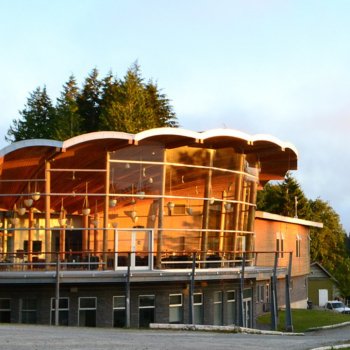
The Rix Centre for Ocean Discoveries is a stand-out landmark on Canada’s west coast and the site of our Conference Centre. This striking facility, with its scalloped roof, combines flexible meeting space with an awe-inspiring ocean view. This building also houses research facilities, a compound microscope with differential interference contrast optics, and other microscopes for larger specimens.
Main Building
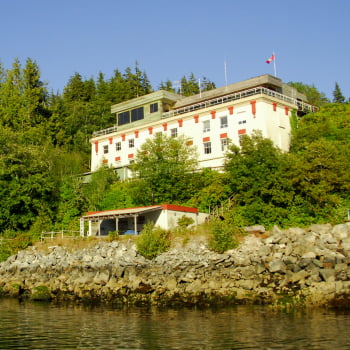
The ‘Main Building’ houses administrative and library services, and most of the university course activities are carried out here. Education facilities include laboratories with flow-through seawater tanks.
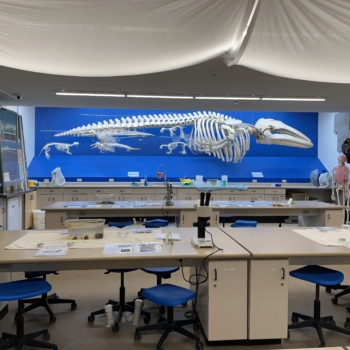
Whale Lab
The Whale Lab is the main classroom and laboratory facility for our field trip and workshop participants. This education laboratory houses flow-through sea water tanks, a touch tank so students may observe and handle living marine organisms, a collection of marine mammal skeletons, and equipment such as microscopes, video conferencing technology, and extra rain gear.
Specialty Equipment
We have a wide range of research equipment on site, such as (this is not an exhaustive list):
- Chillers
- PCR Equipment
- Autoclaves
- Ultracold Freezers
- Incubators
- Fumehoods
- Laminar Flow Hoods
- Liquid Scintillation Counter
- Osmometer
- Atomic Absorption Spectrophotometer
- Centrifuges
See this page here for information on our fleet of research vessels.